
Blog
Growing Quality Miscanthus Starts in the Field
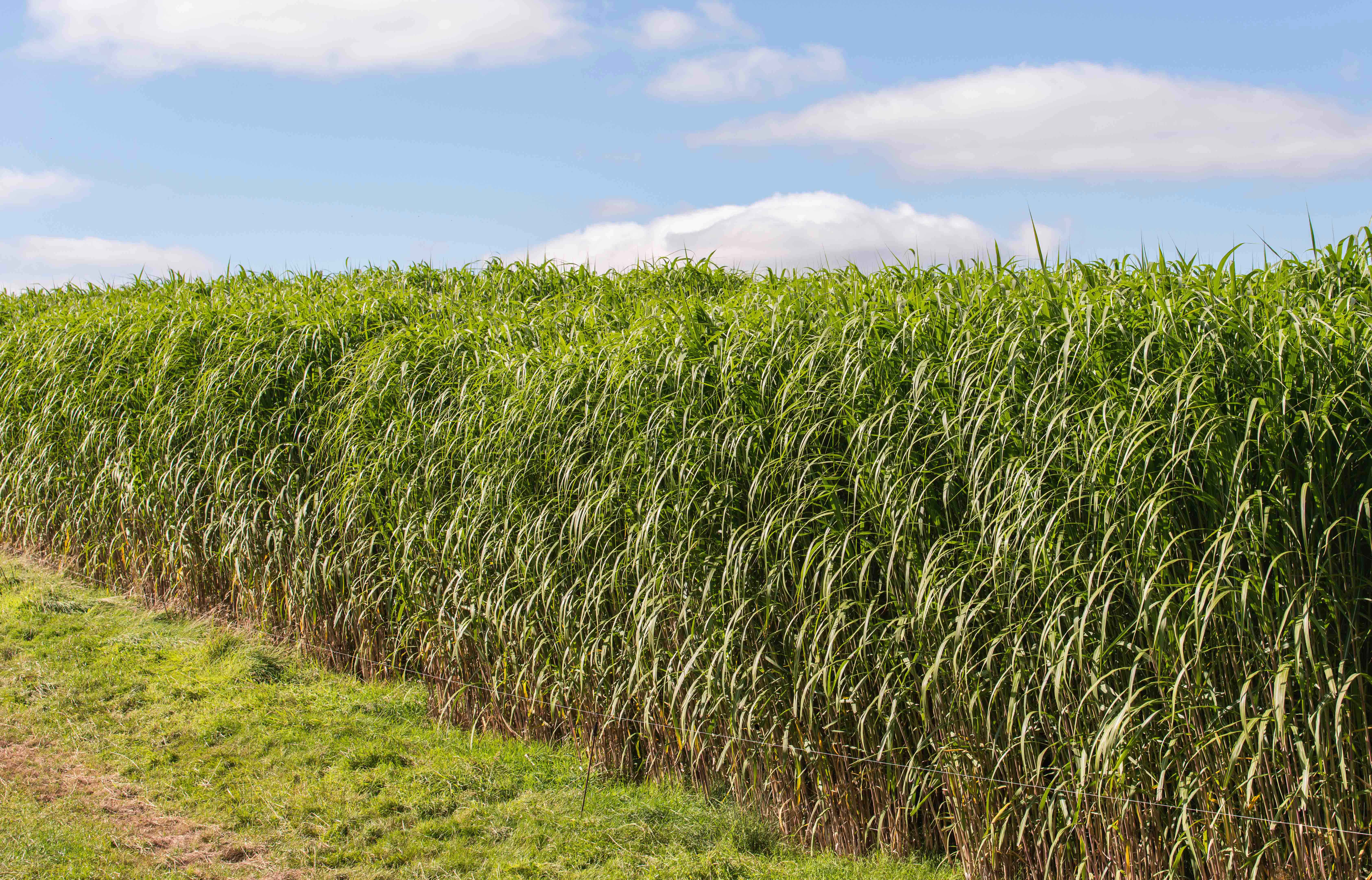
A final product can only be as good as the quality you start with. This is true in just about any application, and it is no different when talking about the quality of product that you get with Miscanthus from MFiber.

Quality in the field
If you want a good product you have to start with the best quality rhizome seed stock. Besides the obvious reason of higher viability and better stands of Miscanthus, the not so obvious reasons for quality rhizomes has to do with post winter survivability, weed control and leaf material.
The first year
The first year of life for Miscanthus is a little fragile, and this fragile time is very critical because we have to maintain high plant populations in the field to guarantee the highest possible tonnage per acre. The plants are usually small the first year and do not grow very tall. The roots are not very aggressive which can be detrimental when going into winter as they have the ability of freezing and having “winter kill.” While winter kill typically only happens in the northern states above the 40th parallel. Planting depth of the rhizome seed stock, proper ground preparation and number of rhizomes planted are critical in decreasing these factors that affect stand. Better stands also decrease weed pressure because Miscanthus has the ability to outcompete just about any weed. This only holds true when the stand is uniform and does not have a lot of areas missing plants.
Consistently premium
Finally, in order to obtain a consistently premium product, Miscanthus has to be harvested properly. In Miscanthus harvest, the cane and leaf material are both harvested between December and March. Although the cane is of majority interest for MFiber, some of the leaves of Miscanthus are harvested as well but this can be managed. Harvest takes place after the plant has gone through a senescence cycle. This process actively puts nutrients found in the plant during growth back into the rhizomes in the ground. Harvesting after this process has occurred guarantees there to be minimal nutrients found in the material and prepares rhizomes for a quick start next spring. In addition, harvesting after senescence allows leaf material to fall on the ground and cutting the cane 6 inches high ensures fewer leaves harvested.Starting with high quality rhizomes and the harvesting process are why we continually state that “quality starts in the field.”

Eric Allphin, V.P. Business Development
Eric Allphin is a native to Southwest Missouri. He was born in Joplin, Missouri and grew up near Granby, Missouri on a small hobby beef farm. After graduating high school at East Newton, Eric served a two-year mission in Costa Rica for his church. Upon returning home, he received his Associates Degree at Crowder College and transferred to University of Missouri where he graduated in December 2009 with his Bachelor of Science in animal science. After completion of his bachelor’s, Eric decided to further expand his knowledge into agriculture as he felt both degrees would complement each other. Eric received and assistantship with the University of Missouri and worked closely with USDA-ARS. His research was focused around how crop performance changed depending upon the landscape in which that crop was planted. So how corn, soybeans and also perennial grasses like switchgrass or Miscanthus would perform on different topsoil depths. His research was very conclusive, and Eric graduated with his Master of Science in crop, soil and pest management in December 2011.
After owning an ag consulting business for a few years, Eric accepted the position of Director of Agriculture/Agronomist for Renew Biomass. Eric focuses his efforts toward the agricultural side of our business; managing the production of Miscanthus on over 5,000 acres.
Most importantly, Eric has been married to his beautiful wife, Rachel, for 10 years. They have 3 children: Maveric, Wyatt and Emery.