
Blog
Miscanthus offers a sustainable pet food fiber source
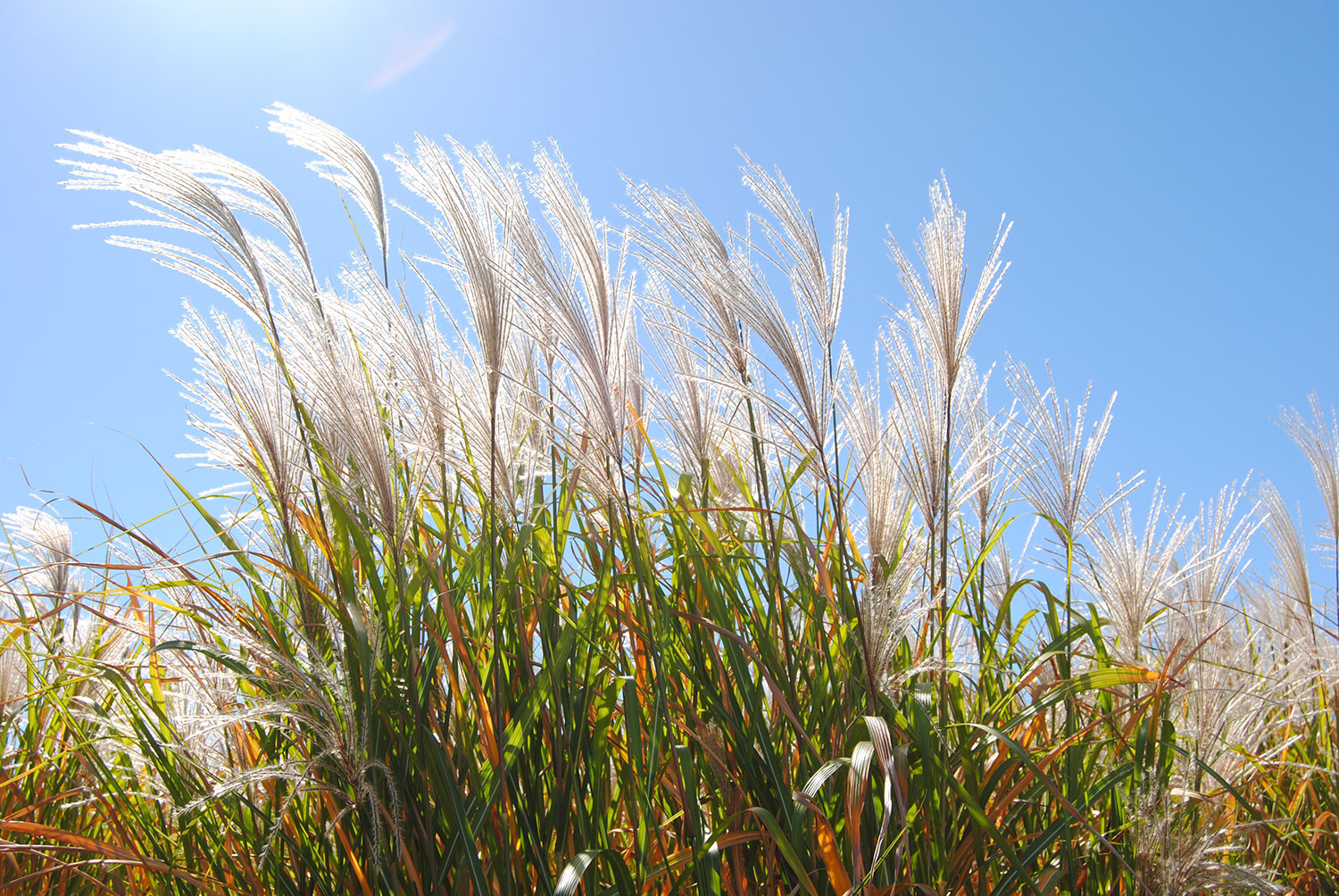
It seems like everywhere we look someone is talking about “climate change” or “being environmentally friendly” or “going green.” Whether you agree with the whole “Going Green” movement or not, the fact is that most everyone would agree we should be good stewards of the earth. At MFiber, we take growing a sustainable crop and fiber source to a whole new level. One of the definitions of sustainability means: the quality of not being harmful to the environment or depleting natural resources, and thereby supporting long-term ecological balance. Miscanthus is a crop that helps touch on all the factors that make a crop sustainable. Let me explain.
1. Planted once every 20 years.
There are only a few stands of Miscanthus that are over 20 years old, so who knows, maybe it will last even longer. This is an important topic. When you consider any major annual crop that is in production today like corn, soybeans, sugar beets or wheat, that crop is planted each year and harvested each year. In most cases the soil has to be worked year after year. If you talk about fiber sources like cellulose processed from trees, they have to be cut down and replanted, waiting years for another harvest.
2. Minimal nutrients removed and required.
Miscanthus puts its nutrients used for growing back in the ground and rhizomes to await the next year’s growing season. This means that the harvest, which is done in the winter while the plant is dormant, doesn’t remove many nutrients.
3. Decreases erosion.
As you will find with most all perennial grasses, they help hold the soil and increase water movement through the soil profile. Miscanthus has a root system that goes more than 12 feet deep in the ground. As the roots die off from one year to the next there are channels that are formed that allow for water to move throughout the profile of the soil. This is very important on highly erodible landscapes. Many times in highly erodible landscapes, there is a clay layer that is just below the soils surface that does not allow water to move through that profile very easily. Miscanthus roots help to penetrate the clay layer while also holding the topsoil in place.
4. Environmentally friendly.
There are many things that cause Miscanthus to top the charts on the list of sustainable crops and I’ve already talked about a few like erosion control and minimal nutrient uptake. The fact that there are not chemicals like peroxides and acids used in the processing of Miscanthus to make MFiber like there are in the pulping process with traditional wood cellulose, makes MFiber the number one fiber choice on the market today.
5. Consistency.
The product MFiber that is produced by Miscanthus has the ability to offer the consistency from year to year because of its ability to not be affected by weather and by nature, it has low amounts of nutrients in the final product.
MFiber has looked at all the other fiber sources that are available to grow and by far, Miscanthus is the crop of choice because it touches all facets of sustainability.
MFiber has looked at all the other fiber sources that are available to grow and by far, Miscanthus is the crop of choice because it touches all facets of sustainability.

Eric Allphin, V.P. Business Development
Eric Allphin is a native to Southwest Missouri. He was born in Joplin, Missouri and grew up near Granby, Missouri on a small hobby beef farm. After graduating high school at East Newton, Eric served a two-year mission in Costa Rica for his church. Upon returning home, he received his Associates Degree at Crowder College and transferred to University of Missouri where he graduated in December 2009 with his Bachelor of Science in animal science. After completion of his bachelor’s, Eric decided to further expand his knowledge into agriculture as he felt both degrees would complement each other. Eric received and assistantship with the University of Missouri and worked closely with USDA-ARS. His research was focused around how crop performance changed depending upon the landscape in which that crop was planted. So how corn, soybeans and also perennial grasses like switchgrass or Miscanthus would perform on different topsoil depths. His research was very conclusive, and Eric graduated with his Master of Science in crop, soil and pest management in December 2011.
After owning an ag consulting business for a few years, Eric accepted the position of Director of Agriculture/Agronomist for Renew Biomass. Eric focuses his efforts toward the agricultural side of our business; managing the production of Miscanthus on over 5,000 acres.
Most importantly, Eric has been married to his beautiful wife, Rachel, for 10 years. They have 3 children: Maveric, Wyatt and Emery.