
Blog
New Pet Food Insoluble Fiber Alternative Knocks Out Cellulose
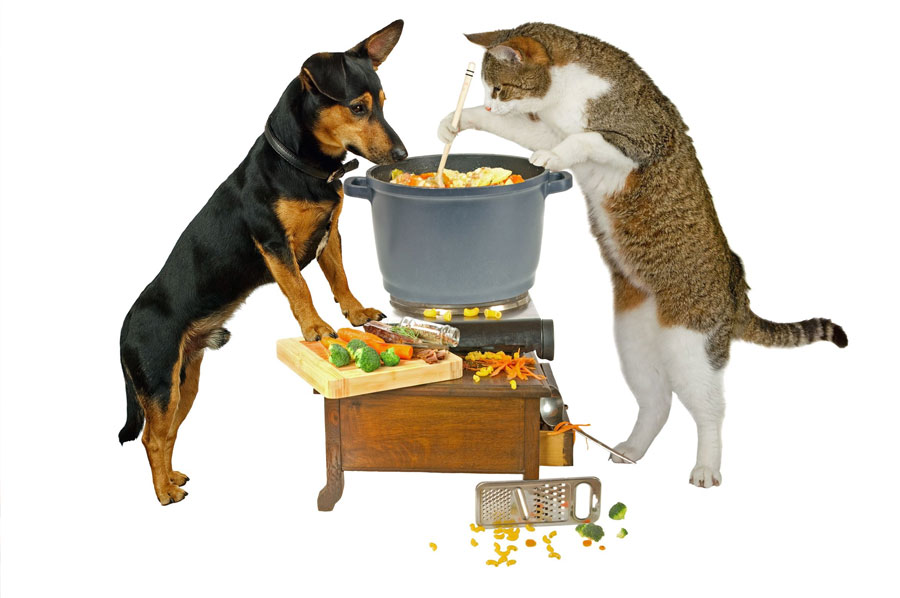
Recently, Kansas State University evaluated the use of Miscanthus grass as a fiber source in dog and cat diets. First, let me preface the article by quickly explaining fiber’s role in pet food formulations before discussing the results of the research conducted at Kansas State University, led by Dr. Greg Aldrich, Research Associate Professor, Department of Grain Science and Industry.
Why fiber in pet food?
Fiber acts as a normalizer for the gut. Its major contribution to commercial dog food is to modify the digestive process by affecting the speed of passage of food in the digestive system. Fiber has the ability to absorb moisture and act as a lubricant which can slow down peristalsis in cases or diarrhea, or speed it up in cases of constipation.
Typically, fibers, predominately wood cellulose, are used in formulations for weight control and calorie restricted diets. Fiber is also used in diets to aid in hair ball management among cats.
With the market demanding all-natural and wholesome ingredients, there is a shift away from wood cellulose, an expensive but primary source of insoluble fiber in the industry.
A quick review of the research
This study was designed to compare the digestibility of Miscanthus grass (MFiber) to cellulose and beet pulp. The base recipe used in the evaluation was formulated to match a “lite” dog and cat food with protein primarily derived from animal sources.
A total of 12 beagles and 12 domestic shorthair cats were fed for a period of 9 days of adaption to the MFiber diet, followed by 5 days of collection. Each animal was fed each diet, Miscanthus, cellulose and beet pulp, over the course of the experiment in a replicated Latin square design, which allowed the animals to serve as their own control.
The animals were fed enough food to maintain body weight throughout the duration of the study. The animals were fed twice a day and excess food was determined one hour after each feeding.
Following the 9 days of adaption, feces were collected after each meal and whenever feces were observed throughout the day for 5 days. The feces were recorded and scored according to a 5-point scale, then collected and frozen for later analysis. The animals had continuous access to water and urine was also collected.
Once the study concluded, fecal samples were weighed, dried and ground to pass a 1 mm screen. Both food and feces samples were examined for “dry matter, organic matter, crude, protein, crude fat (by acid hydrolysis), crude fiber, neutral detergent fiber, acid detergent fiber and total dietary fiber according to AOAC international approved analytical methodologies. Food and feces were also analyzed for direct digestibility using internal and external markers.
A snapshot of the results
With respect to acceptability, all three diets were readily eaten by the dogs and cats. Dietary Dry Matter and Organic Matter of Miscanthus was found to be similar to cellulose and the two also appear to have a similar impact on protein utilization and fecal scores.
After reviewing the results from these studies, there is no doubt that Miscanthus grass (MFiber) offers a reliable, affordable and natural alternative to insoluble fibers, such as wood cellulose.
Study information summarized from Donadelli, Aldrich, and Alvarenga, 2016a, 2016b in the Proceedings of the American Society of Animal Science meetings, Salt Lake City, UT (pp 200 & 203).

Cal Boender, President
Calvin D. Boender was raised in the Dutch Christian Reformed area of Highland, Indiana. After high school, he attended Calvin College and graduated from Grand Valley State College, in 1978, with a bachelor's degree with honors in Political Science.
An accomplished real estate developer throughout the past 35 years, Boender made his first investment in the agriculture industry in 2007. He partnered in various agricultural ventures with companies as diverse as Consolidated Barge & Grain and Topo Solutions Inc. Intrigued by the potential of M-Fiber, he formed Renew Biomass in 2015 to unlock the potential of Miscanthus grass. Since that time he has focused on disrupting the $2.4 billion dollar dietary fiber market and is in the process of bringing M-Fiber to the $28 Billion Dollar US Pet Food Market.
Cal has been a major contributor to various philanthropic causes and non-profit organizations addressing the needs of children and less-fortunate individuals. He resides in the suburbs of Chicago with his wife and two dogs, where he enjoys reading and biking.