
Blog
Washington agriculture a sight to see for Miscanthus producers
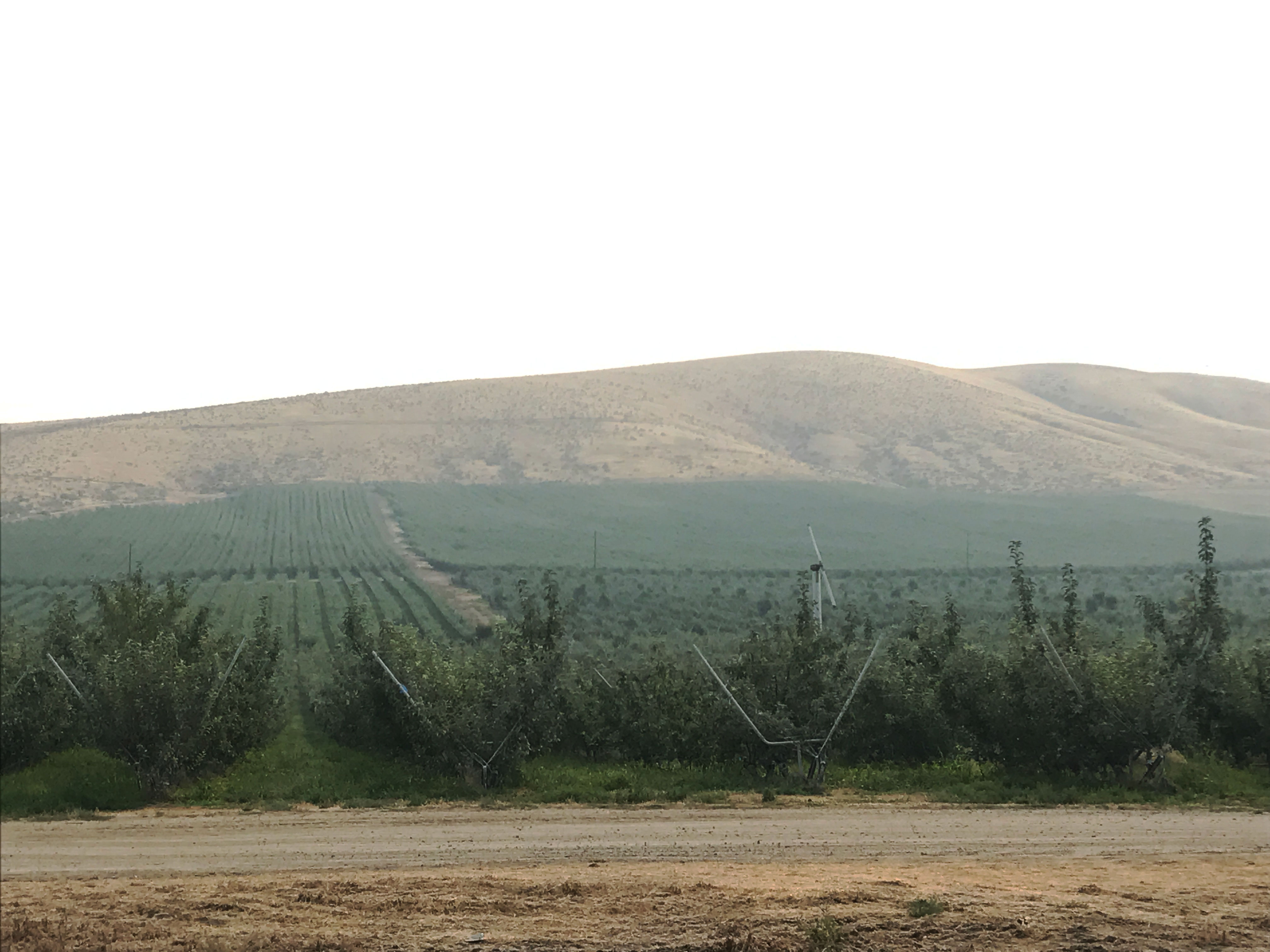
I recently had the opportunity to visit Washington state on a business trip for Renew Biomass. While I was there, my flight schedule allowed me some time to be able to take a quick look at some local agriculture around the Tri-City area. The first thing I noticed was this area is very arid or desert-like. After talking with some local farmers, they were quick to explain that yes, it is a desert. In this area, they rely heavily on irrigation. We, not native Washington folks, typically associate the wet and rainy Seattle weather to the whole state of Washington, however, Seattle is on the west side of the Cascade Mountains that split the state. The ocean on the west side provides some amount of rain, about 155 days a year. The east side of the mountain, however, sees as little as 7 inches all year due to the rain clouds not being able to make it over the mountain. Irrigation of crops does not deter agricultural production down in the state. In fact, Washington state’s top ten cash crops are apples, wheat, potatoes, hay, marijuana, cherries, grapes, pears, hops and barley.
My business took me to Dayton, Wash., from where I landed in Pasco, Wash. As I drove down I noticed many of the state’s top ten crops, but the one that amazed me the most were the wheat fields. They were still in the process of harvesting wheat and it was a sight to see. The steep hills in Washington were planted in wheat. I had heard of the Palouse Hills of the state, but had never seen how steep they were. Because of the low amount of precipitation, erosion is not as large of an issue like we find in Missouri when we plant on steep hills. That being said, I have never seen row crop agriculture on hills that steep. The combine tractors are even specially made for harvest so they do not tip over. The combine suspension is on hydraulics which allow it to stay level, while the header follows the slope of the terrain.
The next day while I waited for my flight, I drove to a local orchard, Ray French Orchard. The peaches and nectarines were in season so I picked and brought home many local peaches, some of which I had never heard of including Donut peaches and Whites. The Donut peaches resemble donuts and are as sweet as Jolly Ranchers. They told me of a large farm up on the hill so I headed that way to see an apple orchard.
It was beautiful! It was a 1200-acre apple farm. They were in the process of thinning the apples from the tree. Thinning is a process of removing about one-third to two-thirds of the apples to allow them to grow larger. Without thinning, they apples would stay very small. This orchard grew, Gala, Fuji, Golden Delicious and many more. I talked to the head field manager and picked his brain about production. I noticed they rely heavily on the Hispanic population for harvest. Picking the delicate fruit is a manual-labor intense job. The 1200-acre apple farm employs about 200 employees seasonally and keeps about 50 employees full time. Very different from the corn, soybean and Miscanthus harvests that we have here in Missouri.